Showing posts with label Class VIII to XII. Show all posts

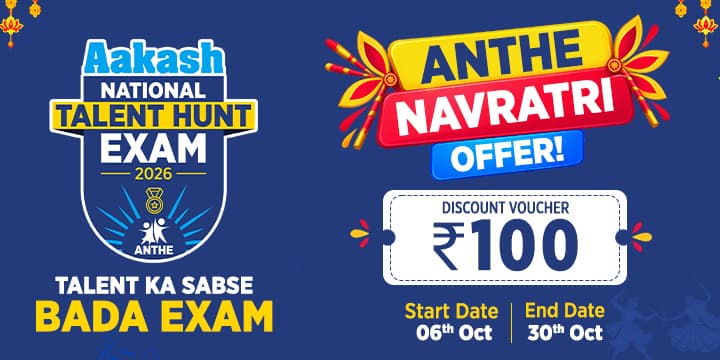
Aakash ANTHE 2026 – Register Now & Win Scholarships


Are you aspiring for a bright career in medicine or engineering? The Aakash National Talent Hunt Exam (ANTHE) 2026 is your gateway to success! Test your knowledge, showcase your skills, and win exciting scholarships and awards.


๐Ÿ“… Aakash ANTHE 2026 Exam Dates

  • Online exam timing

    27th Oct – 1st Nov

    10 AM – 10 PM

    Take the exam anytime during the login window from the comfort of home.

    Offline exam timing

    9th Oct, 11th Oct, 25th Oct & 1st Nov

    10:30 AM – 11:30 AM

    At your nearest designated Aakash examination centre.


๐Ÿ’ฐ Scholarships & Awards

  • ₹250 Crore Scholarship Pool* – Up to 100% Scholarship for top performers

  • ₹2.5 Crore Cash Awards* for top rankers

  • All India Rank – Know your true potential on a national level

*Terms & Conditions apply.


⏰ Exam Timings

  • Online Exam: 10:00 AM – 10:00 PM (Students can take the exam anytime during this login window)

  • Offline Exam: 10:30 AM – 11:30 AM


๐ŸŽ“ Eligibility

Open for Class V, VI, VII, VIII, IX, X, XI & XII studying students.


๐Ÿ“ How to Register for ANTHE 2026?

1️⃣ Verify Mobile Number – Enter your number and receive OTP
2️⃣ Submit Your Details – Fill the online form
3️⃣ Registration Successful – Get your admit card and login details


⏳ Last Date of Registration

  • Offline Exam: 7 days before the examination date

  • Online Exam: 3 days before the examination date


Share:

GENIUS Olympiad Science 2025

The GENIUS Science competition is a prestigious platform for students to apply scientific knowledge and innovation to solve pressing environmental issues. The competition encourages students to use the scientific method to analyze problems and propose solutions that address critical environmental concerns.

Share:

GENIUS Olympiad Speech 2025

The GENIUS Speech competition offers a unique platform for students to raise awareness about pressing environmental issues, encouraging critical thinking and inspiring action through persuasive speeches. This year’s topic, "Carbon Trading," challenges students to explore the complex topic of carbon markets and their potential role in addressing global climate change.


The GENIUS Speech 2025 event invites students to not only present their understanding of carbon trading but also to propose solutions and engage in meaningful discussions with judges. With a focus on carbon markets—systems where companies buy and sell carbon credits—the competition aims to highlight the importance of mitigating anthropogenic carbon emissions and fostering innovative, sustainable solutions for a better future.


GENIUS Speech 2025 Topic: Carbon Trading

The GENIUS Speech 2025 topic addresses the role of carbon trading in reducing global carbon emissions. Carbon markets allow companies and countries to buy and sell carbon credits or offsets, with the hope that over time, this will lead to a reduction in total global emissions. As climate change accelerates, finding effective solutions to decrease carbon emissions has become more urgent than ever.

Key Questions to Address in the Speech:

  1. How might carbon markets function, and why might they be a solution to increased carbon emissions?
  2. What are important factors that developing countries must consider when utilizing carbon markets?
  3. What are important factors that developed countries must consider when utilizing carbon markets?
  4. What are the inherent difficulties in establishing and maintaining carbon markets?
  5. What are the inherent difficulties in utilizing carbon offsets?
  6. How might carbon offsets help, hinder, or accelerate development in your country?
  7. What are the possible positive side effects of carbon markets for your country?
  8. What are possible negative side effects for your country of carbon markets?
  9. Overall, should your country participate in carbon markets? Why or why not?

Students are encouraged to consider both global and local perspectives as they address the challenges and opportunities posed by carbon markets, and how this system might impact their home country’s economy, environment, and development.


GENIUS Speech Application Process

The GENIUS Speech competition consists of two stages: an initial video submission and a live presentation at the GENIUS Olympiad fair. Here’s a breakdown of the process and rules:

Step 1: Initial Video Submission (Deadline: April 15, 2025)

To begin, students must record a one-minute speech on the topic of carbon trading. This video must be uploaded to YouTube and linked during the application process. The speech should demonstrate an understanding of the topic and engage with the critical questions posed by the competition.

  • Video Length: 1 minute
  • Language: English
  • Video Title: “GENIUS Olympiad Speech–2025: [Title of your project]”
  • Video Format: The speech must be recorded in full-body and should have clear audio with minimal background noise. Make sure to speak naturally and avoid reading from a script. Eye contact with the camera is crucial for engaging your audience.
  • Submission Details: Provide the YouTube link in your application. The file name should be in English characters, with less than 25 characters.

This video will be evaluated by the judges for the quality of content and clarity of delivery.

Step 2: Finalist Speech at the Fair (June 2025)

Finalists will be selected based on their initial video submission. These students will be invited to present their three-minute speech on stage at the GENIUS Olympiad Fair.

  • Speech Length: 3 minutes
  • Presentation Setup: Students will stand at a podium in a classroom-style setting. No microphones will be used during the speech.
  • Timing: The speech will be timed, and students will be given a warning bell at the 2-minute and 2:30-minute marks. They will be stopped at the 3-minute mark.
  • Q&A Session: After the speech, judges will ask questions for 6-7 minutes to assess the student’s understanding of the topic and ability to engage in a thoughtful discussion. Responses to these questions will influence the student’s score.

Judging Criteria includes the clarity of the message, persuasiveness, depth of understanding on the topic, and the ability to respond to questions confidently.


What to Expect at the Fair

At the GENIUS Olympiad Fair, finalists will give their three-minute speeches in front of a panel of judges. This is an exciting opportunity for students to showcase their public speaking and persuasive skills on a global stage.

  • No Supervisors Allowed: Supervisors and other participants are not allowed in the judging room during individual student presentations. Only the student, the judges, and GENIUS staff will be present.
  • Professionalism: Students are required to present in business attire, demonstrating their professionalism and readiness to deliver a strong pitch on this critical environmental topic.

GENIUS Speech 2025 Judging Criteria

Judges will evaluate each speech based on several important factors, including:

  1. Clarity and Structure: Is the speech well-organized and easy to follow? Does it clearly address the key questions and present a coherent argument?
  2. Engagement: Does the speaker engage the audience and maintain interest throughout the speech?
  3. Depth of Understanding: How well does the student understand the complex issues surrounding carbon trading? Are they able to explain the challenges and potential solutions effectively?
  4. Critical Thinking: Does the student offer thoughtful insights into the pros and cons of carbon markets, especially from the perspective of their home country?
  5. Response to Questions: How well does the student respond to the judges’ questions? Are they able to think on their feet and demonstrate a deep understanding of the issue?

Important Dates

  • Application Deadline: April 15, 2025
    (Submit your one-minute video via YouTube by this date)

  • GENIUS Olympiad Fair: June 2025
    (Finalists will give their three-minute speeches at the fair)


Share:

GENIUS Olympiad Business 2025

The GENIUS Business Olympiad provides an exciting platform for students to combine business acumen with a passion for environmental sustainability. Through this competition, participants are encouraged to develop innovative business plans that focus on reducing environmental impact and promoting social responsibility within the business world. Whether through new products, technologies, or strategies for existing businesses, the GENIUS Business competition aims to inspire the next generation of entrepreneurs to lead the charge toward a greener, more sustainable future.

Share:

GENIUS Olympiad Robotics 2025

The GENIUS Robotics Olympiad continues to inspire innovation and creative problem-solving by engaging students in the world of engineering and robotics. In 2025, the competition’s theme, Genie Restorator, challenges teams of young engineers to design, build, test, and control robots that will address real-world environmental issues. Students will dive deep into the problem of land restoration after a natural disaster, where they must clean up debris, sort recyclables, and plant trees, all through their custom-built robots.


The Genie Restorator mission gives students a unique opportunity to blend engineering with environmentalism. The challenge focuses on developing robots that can perform multiple tasks, from cleaning debris to planting trees, all while adhering to the rules of the competition. This year’s event encourages students to harness their skills in problem-solving, teamwork, and research to find novel solutions to pressing environmental concerns.


What is the Genie Restorator Challenge?

In the Genie Restorator competition, teams of up to three students will compete to restore land affected by a natural disaster. The task involves cleaning debris, recycling items, and reforesting a section of land in a shared environment. The field is divided into multiple subfields, where each team must perform specific tasks to score points.

The main objective is to create a robot that can:

  1. Collect and remove debris (represented by tennis balls).
  2. Sort and transport recycled items (wooden cubes of different colors).
  3. Transport and plant trees (water bottles) in a designated planting area.

The robot will be required to complete these tasks efficiently, with a time limit of three minutes for each round.


Robot Categories

The GENIUS Robotics 2025 competition is divided into two categories based on robot power and kit capabilities:

  • Small Robot Category: This includes robots built using kits like LEGO, VEX IQ, or any similar motor-powered kits.
  • Large Robot Category: This category includes robots built using more advanced kits like TETRIX, VEX VEX-V5, or VEX Pro, and other similar kits with motor power not exceeding 12V.

Teams wishing to use a robot kit not listed here must contact the GENIUS Robotics Committee for approval. The robot will be classified into one of the two categories based on its hardware specifications.


Mission Details

The Genie Restorator mission consists of three primary tasks that the robot must perform in order to restore the land and achieve maximum points. Here are the details of each task:

1. Collecting Debris (Tennis Balls)

The first task involves clearing debris from the affected land. The Genie Restorator robot will need to pick up tennis balls scattered across the land and transport them to a designated bin outside of the field. Robots can collect multiple tennis balls at once, but they are not allowed to enter the loading deck during this task. If tennis balls are dropped in the farmlands, the robot may return to collect them again.

2. Recycling (Wooden Cubes)

The second task is to collect and sort recyclable items—two types of wooden cubes (blue and red)—from the affected area. Each robot will need to transport these cubes to their designated recycling bins in their respective subfields. Robots are only allowed to carry one type of cube at a time and must place each cube into the corresponding bin. If the robot knocks over the recycling bin, it will be considered damaged and unusable for the remainder of the round.

3. Planting Trees (Water Bottles)

The final task is to plant trees by transporting 0.5-liter water bottles from the tree nursery to the planting area. This task can only be completed once the first two tasks—removing debris and recycling—are finished. Robots can carry and plant multiple trees at once, but they must ensure that the trees are placed standing in the designated planting area.

Task Order and Restrictions

  • Task Order: The tree planting task (Task 3) can only be completed after the debris removal (Task 1) and recycling (Task 2) tasks are finished.
  • Movement Restrictions: Robots are not allowed to cross the boundaries of their designated subfield, although they may enter the shared affected land zone. Robots must start from the robot lot and can only be modified (e.g., adding attachments or changing code) within this designated area during the competition rounds.

Field Layout

The competition field is divided into two identical subfields separated by blue and red lines, each representing a team’s designated area. The shared affected land zone is where debris and recyclable items will be located. The tree nursery will be located at each subfield, containing five trees (water bottles) for planting.

Here’s the layout of the field:

  • Tennis Balls (Debris): Randomly distributed in the shared affected land zone.
  • Wooden Cubes (Recycling Items): Blue and red cubes will be randomly placed in the shared affected land zone.
  • Tree Nursery: Located at each subfield, with 5 trees (water bottles) for transport and planting.
  • Planting Area: Marked with green tape for tree planting once the previous tasks are completed.

Scoring

The Genie Restorator challenge is scored based on the successful completion of the following tasks:

  • Debris Collection: Points are awarded for each tennis ball collected and placed in the designated bin.
  • Recycling: Points are awarded for each correctly placed cube in the recycling bin.
  • Tree Planting: Points are awarded for each tree placed in the planting area.

The total score for each team will depend on the accuracy and efficiency with which they complete these tasks within the three-minute time limit.

Competition Rules and Guidelines

  • Team Composition: Each team can consist of up to three students, with each student only being part of one team.
  • One Robot per Team: Each team must build and compete with one robot, which cannot be shared among multiple teams.
  • Interference During Rounds: Teams are allowed to make changes to their robot only within the robot lot between rounds. No interference is allowed during the competition rounds.
  • Robot Kit Approval: Any robot kit not listed in the allowed categories must be approved by the GENIUS Robotics Committee before the competition.

What to Expect at the Competition

The GENIUS Robotics event promises to be an exciting, fast-paced challenge where students can showcase their engineering skills and creativity. During the competition, students can expect:

  • Multiple Rounds: Teams will participate in at least three rounds, and each round may take place in a different field.
  • Time Limits: Each team has three minutes per round to complete their tasks and maximize their score.
  • Robot Modifications: Teams can modify their robots between rounds in the designated robot lot, but no modifications are allowed during active rounds.

Judging Criteria

Judges will evaluate each team’s robot based on the following criteria:

  1. Robot Design: Innovation and efficiency of the robot’s design in completing the tasks.
  2. Task Performance: Success in completing each task, including debris collection, recycling, and tree planting.
  3. Teamwork: How effectively the team collaborates to design, build, and test the robot.
  4. Programming: The quality and complexity of the programming that controls the robot.
  5. Time Efficiency: The robot’s ability to complete tasks within the three-minute time limit.


Share:

GENIUS Olympiad Art 2024

The GENIUS Art Olympiad is a global competition designed to engage young artists in environmental advocacy through the medium of visual art. It provides students with a platform to use their artistic talents to create works that raise awareness about pressing environmental issues. The competition invites artists to showcase their skills, express their concerns, and offer solutions through a variety of artistic mediums, including photography, poster design, and mixed media art.

Share:

GENIUS Olympiad Music 2025

Music has always had the power to move, inspire, and evoke emotions. Throughout history, from Homer’s epic poetry to contemporary artists, music has served as a universal language for communicating ideas, telling stories, and calling people to action. In the modern world, the GENIUS Music Olympiad offers a unique platform where student musicians can harness the power of music to raise awareness about one of the most pressing issues of our time: the environment.


The GENIUS Music Olympiad invites young artists to perform, compose, and share their musical talents in a competition that not only celebrates creativity but also highlights the importance of environmental sustainability. This year, the GENIUS Music Olympiad will provide a stage for students to connect with their audiences on a deeply emotional level through performances that communicate the urgency of protecting our planet.

What is GENIUS Music Olympiad?

The GENIUS Music Olympiad combines artistic expression with social responsibility, encouraging students to use their musical abilities to inspire positive change. Whether through a solo performance, a group collaboration, or a vocal showcase, each piece must relate to environmental themes and aim to make the audience reflect on the state of the world’s environment. The competition brings together students from around the globe, providing them with an opportunity to share their passion for music and the environment with a global audience.

Competition Categories

The GENIUS Music Olympiad offers a variety of performance categories that allow students to showcase their musical talents. Here’s an overview of the categories:

1. Music | Solo Performance

  • In the Solo Performance category, students perform a musical piece either on an instrument or with their voice. Solo performers can play live or sing and play their instrument simultaneously.
  • Environmental Tie-In: The performance must have a connection to the environment. Students can perform an original composition or an existing piece that references environmental themes.
  • Artist Statement: Before performing, students are required to read an Artist Statement explaining how their piece connects to environmental issues.
  • Encouragement: Students are encouraged to showcase their cultural instruments and integrate traditional sounds into their performances.

Example: Check out this solo performance featuring an environmental theme.

2. Music | Group Performance

  • The Group Performance category allows up to three students to collaborate and perform a piece of music. It could be a band or ensemble performance, combining various instruments and voices to convey the message of environmental sustainability.
  • Environmental Tie-In: As with solo performances, the group piece should be tied to an environmental issue and should make a meaningful statement.
  • Artist Statement: The group will also need to provide a statement explaining how their performance addresses the environment.

Example: Here’s an example of a group performance focused on environmental awareness.

3. Music | Singer

  • In the Singer category, students perform a song that they have either written themselves or chosen from existing compositions. This category emphasizes vocal talent and artistic expression, with the music either performed live or played back.
  • Environmental Tie-In: The song must reflect environmental themes. It can be a powerful tool for raising awareness and inspiring others through lyrics and melody.
  • Artist Statement: Like other categories, singers must provide an Artist Statement explaining how the song connects to environmental concerns.

GENIUS Music Olympiad: Application Rules

To apply for the GENIUS Music Olympiad, you must follow these guidelines:

  1. Eligibility:

    • Solo Performance: Open to one student only.
    • Group Performance: Open to a group of up to three students.
    • Singer: Open to one student only.
  2. Application Requirements:

    • Artist Statement: A 500-word statement that describes the connection between your musical piece and the environment. This statement should be clear and compelling, explaining why this performance matters in the context of environmental issues.
    • Score and Video: You must submit a well-produced video of your performance. The video must be uploaded to YouTube with the title format:
      "GENIUS Olympiad - YEAR: [Title of Your Project]".
    • File Naming: The artist statement file name should be: Country_Projectname_Statement and must be uploaded in PDF or Word format.
    • Performance Video: Ensure the video quality is high, showcasing your performance in its entirety. The YouTube link must be submitted as part of the application.
    • File Size: Ensure your file names are under 25 characters and in English characters.
  3. Artist Statement:

    • Your statement should describe how your performance reflects an environmental issue, and the impact you hope your music will have on the audience.
    • The statement must be written in English, even if the piece is in another language.
    • The statement will be read aloud before your performance at the event.

What to Expect at the Fair

  • Musical Instruments: Students are highly encouraged to bring their own instruments. The judging room will have the necessary audio and video playback capabilities.
  • Performance Setup: For group performances, ensure all your equipment is pre-set and ready for the judges.
  • Artist Statement: You will be allowed 1-2 minutes to introduce your piece and explain its environmental relevance before performing.
  • Technical Equipment: The competition will provide standard 110V outlets for any electronic equipment. If you need a different voltage, please make arrangements accordingly.
  • Materials: Students should bring printed copies of their Artist Statement and score (if applicable) along with a digital copy of the performance video.
  • Judging Room: The judging room is open to the public during the performance evaluations, and only the students who participate will be recognized with awards if the project wins.

GENIUS Music Olympiad: Judging Criteria

The judges will assess performances based on the following criteria:

  1. Foundations:

    • Accuracy and execution of notes, rhythms, and dynamics.
    • Quality of tonal sound/timbre and fidelity to the provided score (if applicable).
  2. Artistic Merit:

    • Emotional commitment and efficacy: Does the performance convey emotion and connect with the audience?
    • Balance, phrasing, and overall musicality.
  3. Relevance:

    • Clarity and quality of the Artist Statement.
    • The connection of the piece to environmental issues: How well does the performance communicate environmental awareness or urgency?

Why Participate in the GENIUS Music Olympiad?

Participating in the GENIUS Music Olympiad is an incredible opportunity for students to:

  • Raise Awareness: Use the universal language of music to inspire others to take action on environmental issues.
  • Showcase Talent: Perform in front of a global audience and be recognized for your musical skill and creativity.
  • Develop Artistically: Enhance your musical abilities and connect with other passionate artists who share your concern for the environment.
  • Gain Recognition: Stand out in the global community for your commitment to both music and environmental sustainability, opening doors to future opportunities.
  • Make a Difference: Your music can play a pivotal role in spreading awareness and motivating change for a better, more sustainable future.

Important Dates

  • Application Deadline: March 1st, 2024 (11:59 PM US EST)
    • $50 application fee per project.
  • US/EU Participants Deadline: April 16th, 2024
  • The GENIUS Music Olympiad event will take place during the GENIUS Olympiad Fair.

How to Register

Visit the GENIUS Olympiad website to register your music project. Make sure to submit all materials, including the Artist Statement and YouTube video link, before the application deadline.

Register Here: GENIUS Olympiad Registration


Share:

GENIUS Olympiad Short Film 2025

The art of storytelling through short films has evolved dramatically over the past two centuries, from traditional hand-drawn animations to modern digital video. Short films, including live-action, animation, and documentaries, have become powerful tools for conveying emotions, sparking conversations, and highlighting critical issues—especially when it comes to our planet’s environmental challenges. The GENIUS Olympiad embraces this art form through its Short Film competition, offering students the opportunity to create impactful cinematic pieces that raise awareness about global and local environmental issues.

Whether you are interested in animation, documentary, or narrative films, GENIUS Olympiad invites students to share their unique perspectives and creative ideas through the power of short films. Here’s everything you need to know about submitting a short film for the GENIUS Olympiad 2024.

GENIUS Short Film Competition Overview

GENIUS Olympiad’s Short Film competition is a platform where students can use their cinematic creativity to tell stories that address environmental concerns. Students are invited to submit animated, live-action, or documentary films with a runtime of 2 to 6 minutes. Whether your film is informative, expressive, or affirmative, the key goal is to create a visual experience that transports the audience into the story, evokes emotion, and encourages them to think about the environmental issues affecting the world today.

Short Film Categories:

GENIUS Olympiad accepts submissions in the following categories:

  1. Short Film | Narrative

    • This category includes fictional stories, such as dramas, action sequences, or even science fiction. If you're looking to be inspired, search for award-winning short narrative films online. Films in this category should have strong characters, a clear plot, and emotional depth, all while addressing environmental themes.
  2. Short Film | Documentary

    • Documentaries that focus on real-life events, people, or places related to environmental issues are encouraged. This could include personal experiences, local community efforts, or global challenges like climate change or biodiversity loss. Award-winning documentary short films can provide valuable inspiration for your submission.
  3. Short Film | Animation

    • For those with a flair for animation, this category invites the use of hand-drawn, claymation, computer-generated imagery, or frame-by-frame animation to tell a compelling environmental story. Whether it's 2D animation or 3D animation, this is your chance to showcase your technical skills and creativity.

How to Prepare and Submit Your Short Film:

Here are the essential rules and guidelines to follow when preparing your film:

  • Teamwork: Short films can be created and submitted by two students working together.
  • Length: Films should be between 2 to 6 minutes in length.
  • Language: If your film is in a language other than English, English subtitles are required.
  • YouTube Upload: Upload your film to YouTube with the title format:
    "GENIUS Olympiad - YEAR: [Title of the Project]".
    The YouTube link must be submitted during the application process. DO NOT upload the video to the application site itself.
  • Original Work: All elements of your film must be original. While you may use up to 20% of imagery from the web (e.g., stock footage or images), you must credit each image at the end of the film. Films composed entirely of online images or stock footage will not be accepted.
  • File Naming: Ensure the file name is in English characters and is less than 25 characters.
  • By submitting, you grant GENIUS Olympiad the right to freely use your film for promotional purposes.

What to Expect at the Fair:

At the GENIUS Olympiad Fair, you’ll have the chance to present your short film to an audience of like-minded peers and judges. Here’s what you need to know:

  • Presentation Setup: Your film will be screened on a large screen for the audience. GENIUS Olympiad will provide desktop PCs for viewing, but you may also bring your own laptop with an HDMI cable to play your video.
  • Format: It’s recommended that you bring your film on a flash drive in multiple formats, such as MP4, FLV, or Windows Media Player.
  • Allow Time for Edits: You can make improvements to your film between the application deadline and the Fair. Feel free to refine your film before you present it!
  • Verbal Presentation: Students are allowed up to 1-2 minutes to verbally introduce their film during the fair, explaining the message and process behind the creation.
  • Supervisors Not Allowed: Supervisors and teachers are not permitted to be present during the judging sessions.

Judging Criteria:

Your film will be judged based on several important factors, including:

  1. Creativity: Does your film showcase originality and creative design?
  2. Story Flow: How well does your film flow from start to finish? Is it compelling and attention-grabbing?
  3. Production Design: Are the casting, location, costumes, and sets appropriate and effective for telling the story?
  4. Emotional Impact: Does your film create a lasting emotional response in the viewer? Does it make the audience feel something deeply about the environmental issue it portrays?
  5. Technical Quality: How professional are the visuals, audio, lighting, and editing? Are the technical elements of your film well-executed?
  6. Relevance: Does your film address important environmental issues, either locally, nationally, or globally?
  7. Overall Quality: Does your film stand on its own as a complete work of art, regardless of the other criteria?

Why Participate in the GENIUS Olympiad Short Film Competition?

Participating in the GENIUS Olympiad Short Film competition offers a fantastic opportunity to:

  • Raise Awareness: Use your film to draw attention to important environmental issues and motivate others to take action.
  • Showcase Your Talent: This is your chance to demonstrate your filmmaking skills, whether you are a budding animator, a storyteller, or a documentary filmmaker.
  • Gain Recognition: Winning a prize at the GENIUS Olympiad can provide global recognition for your creative work, helping you stand out in college applications or future endeavors.
  • Make an Impact: By creating a film that addresses environmental issues, you have the opportunity to make a positive impact on the world while improving your skills.

Important Dates:

  • Application Deadline: March 1st, 2024 (11:59 PM US EST)
    • $50 application fee per project.
  • Deadline for US/EU participants: April 16th, 2024
  • The Short Film presentation will take place at the GENIUS Olympiad Fair.

How to Register:

Visit the official GENIUS Olympiad website to register your short film project. Make sure to submit your film via YouTube link as per the guidelines above.

Register Here: GENIUS Olympiad Registration


Share:

GENIUS Olympiad Coding 2025

GENIUS Olympiad is an international competition that focuses on environmental issues. Students from around the globe come together to present their innovative projects and solutions in various disciplines, including science, robotics, coding, arts, and business. This Olympiad is a great way to foster collaboration among students who are passionate about sustainability and environmental conservation.

Share:

FutureQuest – Innovate for Our World!

Showcase Your Scientific Innovation at FutureQuest, SciNQuest 2024-2025!

Do you have a scientific idea that could change the world? FutureQuest, the science exhibition segment of SciNQuest 2024-2025, invites students to present their projects that address real-world challenges through innovative solutions. Hosted by Amrita Vishwa Vidyapeetham, FutureQuest offers a unique platform to showcase creativity, research, and problem-solving skills.

Share:

BrainQuest – The Ultimate Science Challenge!

Challenge Your Science Knowledge with BrainQuest at SciNQuest 2024-2025!

For students passionate about science, BrainQuest is the ultimate quiz competition designed to sharpen knowledge and skills. Part of the prestigious SciNQuest 2024-2025, hosted by Amrita Vishwa Vidyapeetham, BrainQuest is an exhilarating journey through the world of science, with an online phase and an exciting on-site finale at Amritapuri Campus.

Share:

MathQuest – Unleashing Your Inner Mathematician!

Explore Your Math Potential with MathQuest at SciNQuest 2024-2025!

If you’re a math enthusiast who loves solving complex problems, then MathQuest, the Math Olympiad segment of SciNQuest 2024-2025, is for you! Organized by Amrita Vishwa Vidyapeetham, MathQuest is a two-phase competition that tests students’ math skills, providing a national-level platform to build a strong mathematical foundation.


What is MathQuest?
MathQuest aims to deepen students’ understanding of mathematics beyond the classroom by challenging their problem-solving skills. Open to students from grades VIII to XII, and even to outstanding students in grades V to VII, MathQuest is designed to encourage the analytical and logical thinking needed for academic and professional success.

Competition Format
MathQuest is a team-based competition, where each team consists of two students from the same school. Here’s a quick overview:

  • Phase 1: Conducted online, with multiple-choice questions covering various math concepts.
  • Phase 2: Students who qualify in Phase 1 will compete on-site at the Amritapuri campus of Amrita Vishwa Vidyapeetham.
  • Participation: Teams can be a mix of students from the eligible classes (VIII to XII and exceptional performers in V to VII). Schools can register a maximum of five teams, each team requiring authorization from the school head.

Prizes
MathQuest offers impressive prizes to top teams:

  • First Prize: Rs. 30,000
  • Second Prize: Rs. 20,000
  • Third Prize: Rs. 10,000
  • Seven Consolation Prizes: Rs. 5,000 each

All teams will receive participation certificates, making MathQuest an enriching experience for every participant.

Why Join MathQuest?
MathQuest not only prepares students for success in mathematics but also enhances their critical thinking skills and builds confidence. By participating, students stand a chance to boost their academic profiles, win exciting prizes, and, most importantly, develop a love for mathematics that will serve them for a lifetime.

How to Register
Registration is completely online. Visit  amrita.edu/events/scinquest to register your team and unleash your inner mathematician!


Share:

TCS InQuizitive 2024 - Inter-school IT Quiz

Tata Consultancy Services (TCS) welcomes you to be part of a brand-new learning initiative for high school students - TCS INQUIZITIVE!


In today’s world, technology plays an integral role in various fields. The quiz will help in understanding this technological revolution with discussions and interesting questions. Schools who participate in the quiz will benefit as the students will stay in touch with the technological developments in various fields like science, sports, engineering, and art.

The TCS Quiz team believes in consistently engaging with the student fraternity through various programs to ignite young minds, inspire them to expand their knowledge and learn to contextualise that knowledge.
TCS InQuizitive 2024 takes a new turn by hosting physical on-ground events across 12 cities, bringing the excitement and energy of live quizzing back to the competition.

Share:

HPE CodeWars 2024 Code Battle

Hewlett Packard Enterprise (HPE) in partnership with Codingal is hosting a competitive online coding competition - HPE CodeWars 2024 Code Battle.
 
A coding challenge for grade 8-12 students to come together and compete in real-time to solve problems in various topics and get on the top of the leaderboard.
 
You will need to solve coding problems using any programming language: C, C++, Java, Python.


Share:

OISKA-MILMA Top Teen Quiz Contest

OISKA, a global environmental organization, in association with MILMA is conducting a state-level written exam for students of classes 8, 9 and 10. The school-level competitive exam will be held on September 21 to identify the best students in the state. Then chapter level competition and district level competition will be conducted for the winning students.

Prizes will be given to the winners of the state-level competition.
 Questions will be from Mathematics, Social Science, Environment, and General subjects.

เดนൈเดธ്เด•ൂเตพ เดตിเดฆ്เดฏാเตผเดค്เดฅിเด•เตพเด•്เด•ാเดฏി, เด’เดฏിเดธ്เด• - เดฎിเตฝเดฎ เดŸോเดช് เดŸീเตป เดฎเดค്เดธเดฐം

เด•ോเดดിเด•്เด•ോเดŸ്: เด†เด—ോเดณ เดชเดฐിเดธ്เดฅിเดคി เดธംเด˜เดŸเดจเดฏാเดฏ เด’เดฏിเดธ്เด•, เดฎിเตฝเดฎเดฏുเดฎാเดฏി เดšേเตผเดจ്เดจ് 8, 9, 10 เด•്เดฒാเดธ്เดธുเด•เดณിเดฒെ เดตിเดฆ്เดฏാเตผเดค്เดฅിเด•เตพเด•്เด•ാเดฏി เดธംเดธ്เดฅാเดจ เดคเดฒ เดŽเดดുเดค്เดคുเดชเดฐീเด•്เดท เดจเดŸเดค്เดคുเดจ്เดจു.เดธംเดธ്เดฅാเดจเดค്เดคെ เดฎിเด•เดš്เดš เดตിเดฆ്เดฏാเตผเดค്เดฅിเด•เดณെ เด•เดฃ്เดŸെเดค്เดคുเดจ്เดจ เดชเดฐീเด•്เดทเดฏുเดŸെ เดธ്เด•ൂเตพเดคเดฒ เดฎเดค്เดธเดฐเดชเดฐീเด•്เดท เดธെเดช്เดฑ്เดฑംเดฌเตผ 21 เดจ് เดจเดŸเดค്เดคും. เดคുเดŸเตผเดจ്เดจ് เดตിเดœเดฏിเด•เดณാเด•ുเดจ്เดจ เดตിเดฆ്เดฏാเตผเดค്เดฅിเด•เตพเด•്เด•ാเดฏി เดšാเดช്เดฑ്เดฑเตผ เดคเดฒ เดฎเดค്เดธเดฐം, เดœിเดฒ്เดฒാเดคเดฒ เดฎเดค്เดธเดฐം เดŽเดจ്เดจിเดต เดจเดŸเดค്เดคും. 

เดธംเดธ്เดฅാเดจ เดคเดฒ เดฎเดค്เดธเดฐเดค്เดคിเตฝ เดตിเดœเดฏിเด•เดณാเด•ുเดจ്เดจเดตเตผเด•്เด•്  เดชുเดฐเดธ്เด•ാเดฐเด™്เด™เตพ เดจเตฝเด•ും.
 เด•เดฃเด•്เด•്, เดธാเดฎൂเดน്เดฏ เดถാเดธ്เดค്เดฐം, เดชเดฐിเดธ്เดฅിเดคി, เดชൊเดคു เดตിเดทเดฏเด™്เด™เดณเดŸเด™്เด™ിเดฏเดตเดฏാเดฏിเดฐിเด•്เด•ും เดšോเดฆ്เดฏเด™്เด™เตพ.


Share:

Mathrubhumi Yes Quiz Me Contest

Fair Future Presents Mathrubhumi  Yes Quiz me 

Mathrubhumi is organising a Mega Quiz Contest for high school and higher secondary school students. 

This is a team event.  A team can have two students. Schools can nominate two teams for the quiz.

Prizes

First : INR 500000/-

Second: INR 200000/-

Third: INR 100000/-

Fourth: INR 50000/-

INR 10000 for District Level winners


เด•േเดฐเดณเดค്เดคിเดฒെ เดนൈเดธ്เด•ൂเตพ, เดนเดฏเตผ เดธെเด•്เด•เตปเดกเดฑി เดตിเดฆ്เดฏാเตผเดฅിเด•เตพเด•്เด•ാเดฏി เดฎാเดคൃเดญൂเดฎിเดฏും เดตിเดฆേเดถเดชเด เดจ เด•เตบเดธเตฝเดŸ്เดŸเตปเดธി เดธ്เดฅാเดชเดจเดฎാเดฏ เดซെเดฏเตผ เดซ്เดฏൂเดš്เดšเดฑും เดธംเดฏുเด•്เดคเดฎാเดฏി เด•്เดตിเดธ് เดฎเดค്เดธเดฐം เดจเดŸเดค്เดคുเดจ്เดจു......


Share:

HBCSE Mathematical Olympiad 2023-24

The first stage of the programme will be called the Indian Olympiad Qualifier in Mathematics (IOQM) organized by the Mathematics Teachers’ Association (India). This will be a three-hour examination consisting of 30 questions with each question having an integer answer in the range 00 – 99. 

The second stage will be an Indian National Mathematical Olympiad (INMO) organized by the Homi Bhabha Centre for Science Education (HBCSE), TIFR. This will be a four-hour examination consisting of six questions with proof-based answers. 


In the 2023-2024 cycle, the selection to the International Mathematical Olympiad Training Camp (IMOTC) will be accomplished in three stages.

First stage exam
Indian Olympiad Qualifier in Mathematics (IOQM) 
The IOQM is being conducted by the Mathematics Teachers’ Association (India). More details about the IOQM will be announced in the first week of July 2023 on the MTA(I) website https://www.mtai.org.in/.
Date: September 3, 2023  Time: 10:00  to 13:00 hours (IST)
Duration: 3 hours
Total marks: 100
The answer to each question is an integer in the range 00-99. No negative marking. OMR-based exam.
Composition of the paper: 10 questions of 2 marks each; 10 questions of 3 marks each; 10 questions of 5 marks each.

Second stage exam
Regional Mathematical Olympiad (RMO)
Date: October 29, 2023; Time: 13:00 to 16:00 hrs
Duration: 3 hours
Number of questions: 06
Each question requires writing detailed proof.

Third stage exam
Indian National Mathematical Olympiad (INMO)
Number of questions: 06
Date: January 21, 2024;  Time: 12:00 to 16:30 Hrs.
Duration: 4.5 hours
Each question requires writing detailed proof.

Eligibility
Students born between August 1, 2004 and January 1, 2011, and studying in Class 8, 9, 10, 11 or 12, are eligible to write IOQM 2023. Please note that NO student born after January 1, 2011 will be allowed to write IOQM 2023.
Details of eligibility criteria available here

All students aspiring to participate in the international mathematical Olympiads must appear in the first stage examination, the Indian Olympiad Qualifier in Mathematics (IOQM)

Last date for student registration for IOQM 2023 has been extended to August 5, 2023.

Sample Question Papers

PRMO

IOQM2022-23 Question Paper & Answer Key

IOQM2021-22 Part A -Question Paper

IOQM2021-22 Part A -Answer Key

IOQM
IOQM 2020 -Questions

IOQM 2020 – Answer Key

PRMO 2019 Question Paper

Answer Key to PRMO 2019

PRMO 2018 Question Paper

Answer Key to PRMO 2018

PRMO question paper 2017

KEY for PRMO 2017

Sample PRMO questions

Sample OMR sheet showing marked answers

 PRMO 2015

1.PRMO 2015 set a

2.PRMO 2015 set b

PRMO 2014

PRMO 2013

PRMO 2012

RMO Question Paper 2019

Answer Key to RMO 2019

For RMO held on October 7, 2018:
Answer Key to RMO 2018

For RMO – Kerala Region and Tamil Nadu Region (October 28, 2018)
Answer Key for RMO 2018 (KL-TN)

RMO 2017
Solution

RMO 2016

CRMO 2016 Paper 1

Solution

CRMO 2016 Paper 2

Solution

CRMO 2016 Paper 3

Solution

CRMO 2016 Paper 4

Solution

RMO 2015

CRMO 2015 Paper 1

Solution

CRMO 2015 Paper 2

Solution

CRMO 2015 Paper 3

Solution

CRMO 2015 Paper 4

Solution

RMO Paper 2015 (Mumbai region)

Solution

RMO 2014

CRMO 2014 Paper 1

Solution

CRMO 2014 Paper 2

Solution

CRMO 2014 Paper 3

Solution

CRMO 2014 Paper 4

Solution

RMO 2014 (Mumbai region)

Solution

RMO 2013

CRMO 2013 Paper 1

Solution

CRMO 2013 Paper 2

Solution

CRMO 2013 Paper 3

Solution

CRMO 2013 Paper 4

Solution

RMO 2013 (Mumbai region)

Solution

RMO 2012

CRMO 2012 Paper & Solution 1

CRMO 2012 Paper & Solution 2

CRMO 2012 Paper & Solution 3

CRMO 2012 Paper & Solution 4

RMO 2012 (Mumbai region) Paper & Solution

RMO 2011

RMO 2010

RMO 2009

RMO 2008

RMO 2007

RMO 2006

RMO 2005

RMO 2004

RMO 2003

RMO 2002

RMO 2001

RMO 2000

INMO2023
1. Question Paper
2. Solutions

IOQM2021-22 Part B Questions & Solutions

INMO 2021 – Questions
PDF password: PotterEvansVerres

INMO 2021 – Solution

 INMO 2020 – Questions

INMO 2020 – Solutions

 Answer Key to INMO 2019

 INMO 2017
Solution

 INMO 2016

1.English Version

2.Hindi Version

3.Solution

INMO 2015

INMO 2014

  INMO 2013

INMO 2012

INMO 2011

 INMO 2010

 INMO 2009

 INMO 2008

 INMO 2007

 INMO 2006

 INMO 2005

 INMO 2004

 INMO 2003

 INMO 2002

 INMO 2001

 INMO 2000


Share:

General Knowledge Quiz

Summer Camps

Scholarships

Labels

Blog Archive

Art Contests

Essay Contests

International Contests

Quiz Competitions